Quiet
room
room
Twenty Questions
Best when people prefer a shared puzzle to a performance. Use a familiar category and take one yes-or-no question at a time.
Read the questioning formatA little structure, a lot of latitude
The best first game is one you can explain before the snacks go cold. Pick a format that matches the room, demonstrate a turn and keep the first round short enough to change your mind.
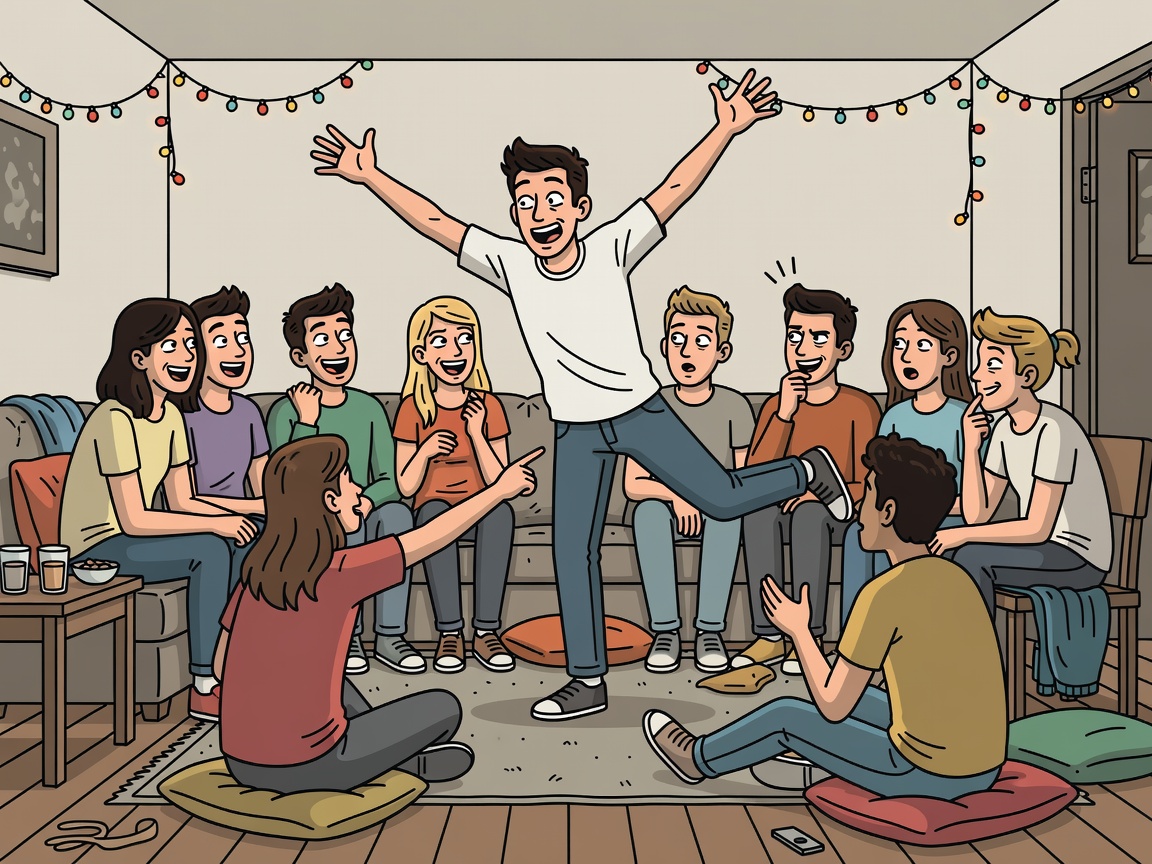
Act out a word or phrase without speaking while teammates guess. Familiar prompts do the heavy lifting; dramatic talent is optional. This is a casual house format, not a universal tournament rule.
Materials: paper slips, a bowl and an optional timer.
Start with everyday actions: brushing teeth, opening an umbrella or carrying an overfull shopping bag. Ask players to write prompts they would be happy to receive themselves. Keep shared cultural references for later, when you know which films, books or songs the group actually recognises.
Check the slips before play and remove anything insulting, personal or impossible to act comfortably. Nobody should discover that the joke is about them after they have already stepped into the middle of the room.
Use these suggested fits as a starting point, not an eligibility test.
Best when people prefer a shared puzzle to a performance. Use a familiar category and take one yes-or-no question at a time.
Read the questioning formatChoose a broad category, then take turns naming an example. Our relaxed version allows a pass and has no elimination.
Read the category rulesChoose something broad, such as things found in a kitchen or animals with four legs. Go around the group with one answer per person. Repeated answers do not score, but the player stays in. Allow someone to say “pass” and come back on the next circuit. End when the group has run out of ideas rather than waiting for one person to fail.
If you want a scoring variation, work in pairs and write as many valid examples as possible during a short agreed interval. Read answers together and settle borderline cases generously. This homemade activity is distinct from Scattergories, the published game with its own letter-based format and official rules.
For a drawing round, prepare simple nouns and ask a volunteer to sketch while others guess. Agree whether letters and numbers are allowed; banning written words keeps the activity focused on the picture. Use a large surface that the group can see, and offer a describer or guesser role to anyone who does not want to draw.
Pictionary is a published drawing-and-guessing game; Telestrations combines drawing with successive interpretations. They are different products, not alternative names for every paper-based sketch game. If you own either, consult its rulebook rather than treating this casual suggestion as an official summary.
Just One is a cooperative word-guessing game in which duplicate clues matter. Codenames asks teams to connect words through a spymaster’s clues. Wavelength centres on interpreting a clue along a conceptual spectrum. Dixit uses illustrated cards and associations. Each creates a different kind of conversation; none is automatically right for every group.
Taboo adds forbidden words to verbal clues, which can be lively but demanding for some language learners. The Resistance involves hidden roles and social deduction, so suspicion is part of its appeal and a reason some guests may prefer something else. The Mind relies on coordinating numbered cards without ordinary discussion. Explain those social demands before handing out roles.
UNO, Jenga, Boggle and Scrabble are familiar names, but familiarity is not universal. UNO needs the card effects explained; Jenga needs a stable surface and comfortable reach; Boggle and Scrabble involve spelling and vocabulary. Use the edition’s supplied rules and offer an alternative instead of describing any game as something “everybody knows.”
Decide whether you are playing a single round, a small series or simply until people want to stop. An announced finish helps guests join without worrying about an endless commitment. Keep prizes unnecessary and stakes symbolic; the score should give the activity shape, not become a judgement of who belongs.
When the room laughs, let it breathe. When a rule causes friction, simplify it or switch formats. A good host is allowed to say, “That one wasn’t the right fit.” You are choosing entertainment, not defending a thesis.
For the traditional acted format, see Britannica: Charades. Named commercial games belong to their respective rights holders; this independent website is not affiliated with them.