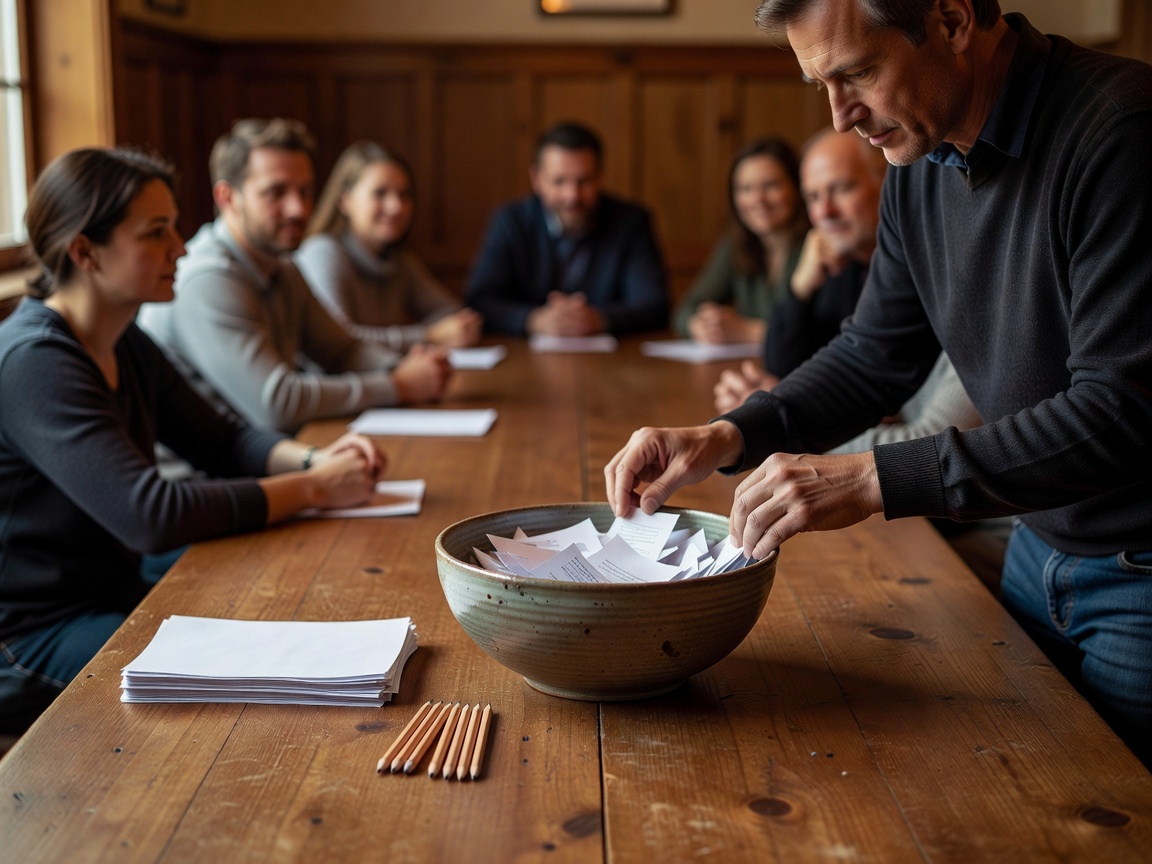
Teams should reduce pressure
Pairing a newcomer with someone they already know can help, but do not assume friendship or comfort from where people happen to sit. Ask whether guests want random teams, existing pairs or a cooperative whole-room format. Avoid public captain-picking, which can turn an ordinary activity into a popularity ranking.
For trivia, give each team time to discuss rather than rewarding the loudest answer shouted across the table. For guessing games, rotate optional roles. A person who enjoys writing may not want to read aloud; a confident speaker may prefer guessing to performing. Invitations work better than assignments disguised as compliments.
Change the format, not the welcome
These comparison rows offer starting points. They are not a complete accessibility checklist, and the guest’s own preference matters more than the host’s guess about what should help.
Use the space you actually have
A small room suits seated guessing, paper trivia and conversation prompts better than movement-heavy activities. Leave a clear route between chairs and the door. Keep hot drinks away from areas where people might gesture suddenly, and avoid balancing a drawing board where it can fall onto a player.
In a larger room, small groups usually hear each other more comfortably than one huge circle. Give each group the same written instructions and permission to move at its own pace. You do not need a grand final unless guests actively want one. Outdoors, weigh down paper and choose activities that do not require people to chase scattered slips.
Let late arrivals join at a natural seam
Finish the current turn, introduce the new guest and give a short example. Add them to a team without restarting the whole evening. If your scoring format makes that unfair, reset the score for a new mini round or treat the rest as cooperative. Social welcome matters more than preserving a casual leaderboard.
The same principle applies when someone leaves early or takes a break. Choose games that can tolerate a changing group, and do not demand an explanation. Hidden-role games can be harder to pause mid-round, so tell players the likely commitment before starting rather than discovering that problem halfway through.
Read the energy without reading minds
Look for practical cues: people cannot hear instructions, turns are dragging or side conversations have become the main event. Ask, “Another round, something quieter or a break?” Do not interpret every quiet face as boredom. Some guests enjoy watching and some need time before joining.
Keep refreshments and conversation separate from winning. Never use drinking penalties, dares or personal disclosures as the default consequence of losing. An evening can be playful without asking anyone to override a boundary. For gatherings with children, select age-appropriate prompts, supervise materials and let the responsible adults set the boundaries.
If something still feels awkward, browse party-plan fixes or start again with an easier opening.